















What Are Rich Results? How to Test Them With Real Examples
How do stars, prices, cooking times and ticket dates get into search results? Using real Google screens, we walk through the main rich result types, how to run a test and how to read the outcome.

Picture two recipe sites on the same search page. Both have a title, a URL and an image. One also shows its rating, the number of votes and the cooking time. Before anyone clicks, they already know how long it takes and how many people liked it. That difference is a rich result.
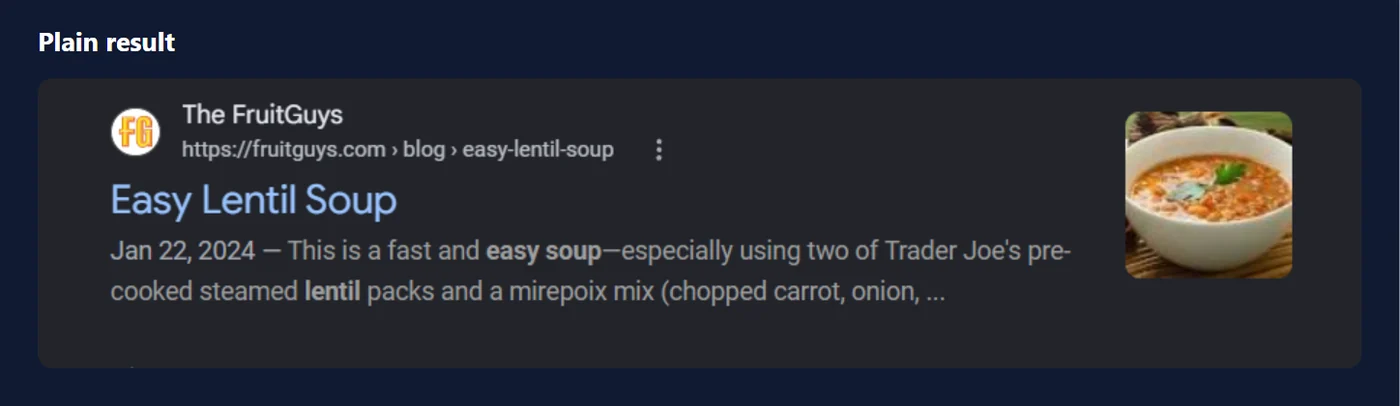
Plain result: title, URL, image and description.
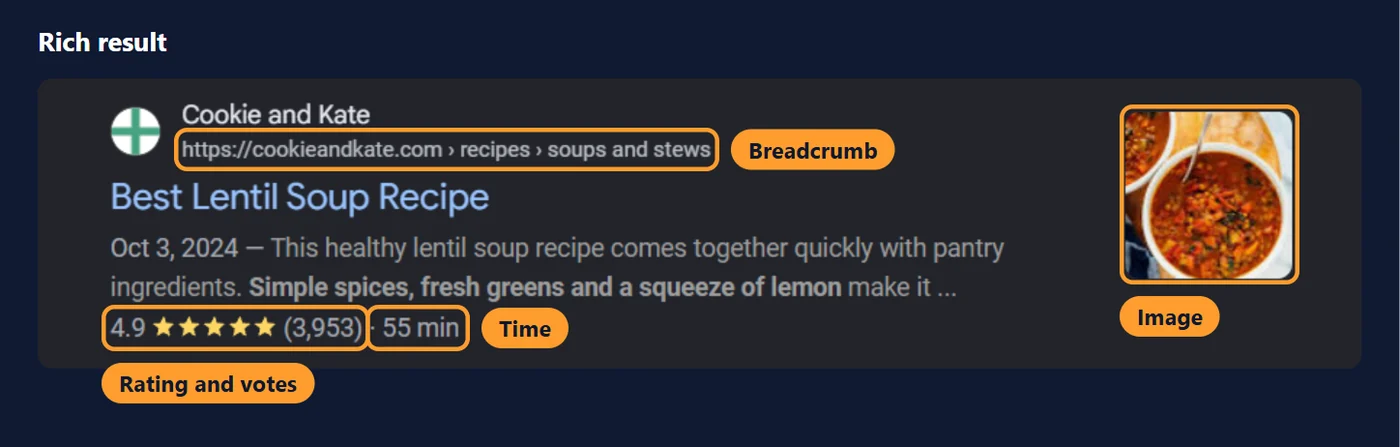
Rich result: the same kind of search also shows rating, votes, time and a breadcrumb.
In this guide we look at the main types on real search pages, then test one page from start to finish. All screenshots were taken on 31 October 2026, so results may look different by the time you check.
What are rich results?
A rich result is a search listing where Google adds extra information to the standard blue link. They used to be called rich snippets. Google usually takes this information from structured data on the page. For the full background, read our structured data guide. Here we focus on what people actually see, and on testing it.
The types you will see most often
Product: price, availability and rating
This is the most valuable type for online stores. Shoppers see the price, stock status and rating on the results page.
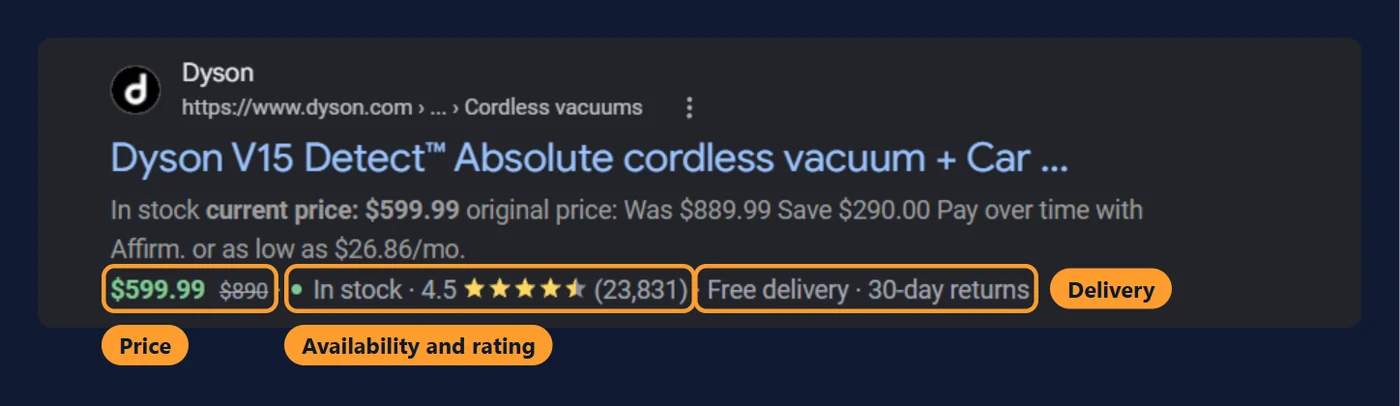
Product result: price, availability, rating and delivery all sit on one line.
Video: preview and length
If a page has a video, Google can add a thumbnail and its length. It stands out easily among text-heavy listings.
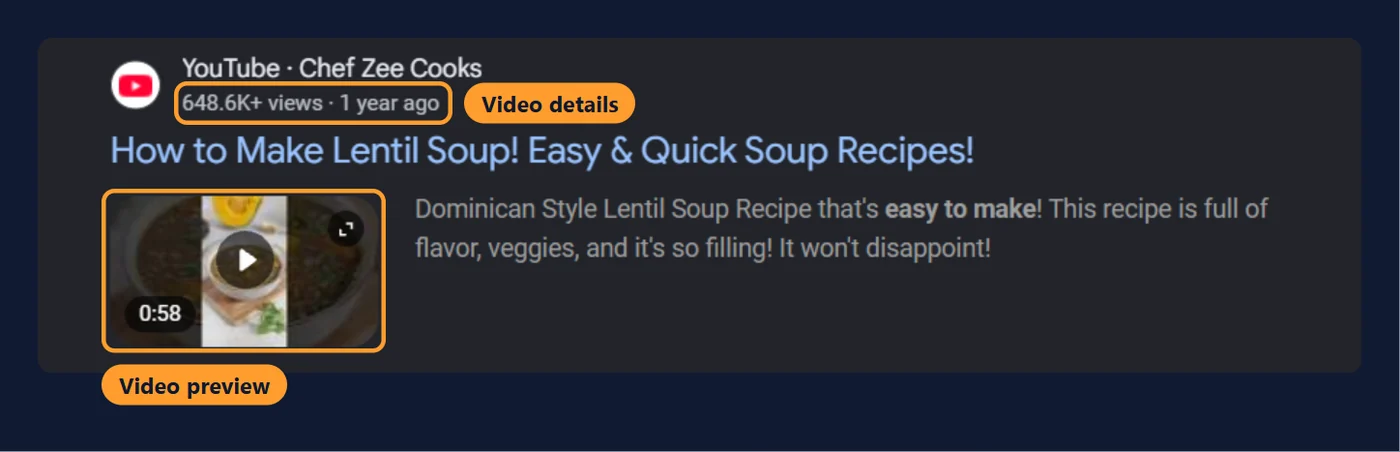
Video result: preview image, length and view count.
Event: date, venue and tickets
Concert, seminar and trade fair pages can appear in a separate block with date, venue and ticket price.
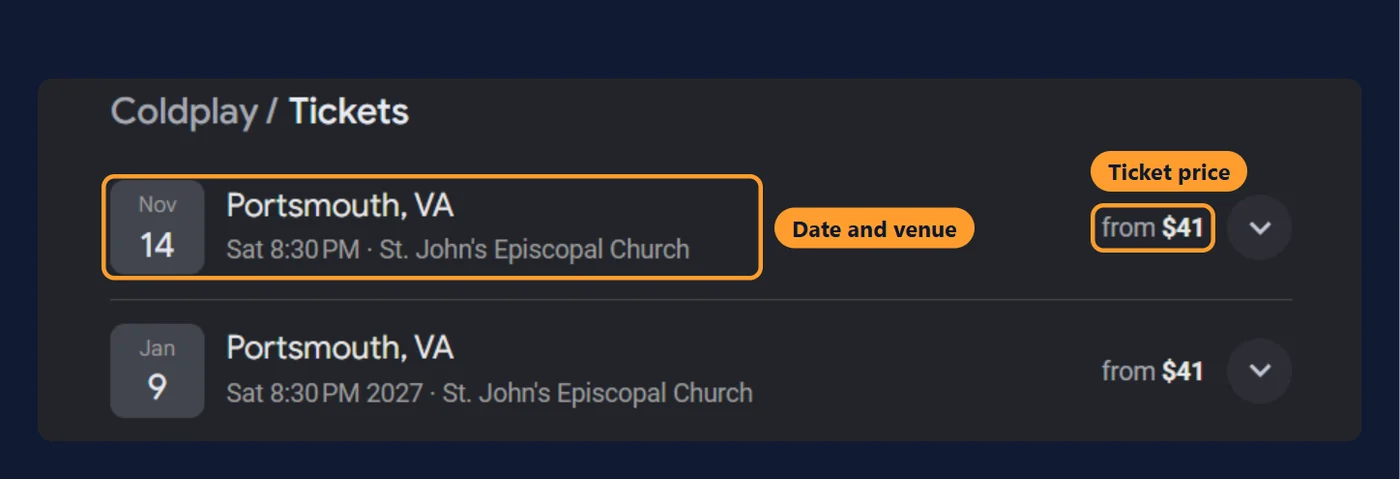
Event result: every row shows a date, a venue and a starting price.
Sitelinks: not something you can mark up
On brand searches, your important pages may be listed under the main result. You cannot switch this on with schema, because Google chooses them. Clear navigation, descriptive page titles and strong internal links make them more likely.
What rich results do and do not do
- They get noticed. Your listing takes up more space and stands apart from competitors.
- They bring better-fit visitors. People who see the price and time first click on purpose.
- They do not lift rankings directly. Google does not describe structured data as a general ranking factor.
- They are not guaranteed. Even perfect markup does not ensure display, because Google decides.
Careful: types that no longer appear
Many older guides get this wrong. Google removed FAQ rich results completely on 7 May 2026. How-to rich results went in 2023. These schemas do not harm your page, but they no longer have a visual result in search. Ignore any advice that says FAQ schema will double your space on the results page.
Which markup format?
| Format | Where it lives | Our view |
|---|---|---|
| JSON-LD | A separate script block on the page | Google's recommended format and the easiest to maintain |
| Microdata | Inside HTML tags | Works, but design changes can break it |
| RDFa | Inside HTML tags | Works, but avoid it on new projects |
Rich results testing, step by step
We tested a real recipe page as our example. You can follow the same path on your own page.
1. Pick the right page
Do not start with your home page. Choose a product, service or article page that already gets traffic. Fixes on your most visited pages pay off fastest.
2. Enter the URL in Google's test
Open the Rich Results Test, enter the URL and start the test. The tool crawls the page live, which can take a minute or two.
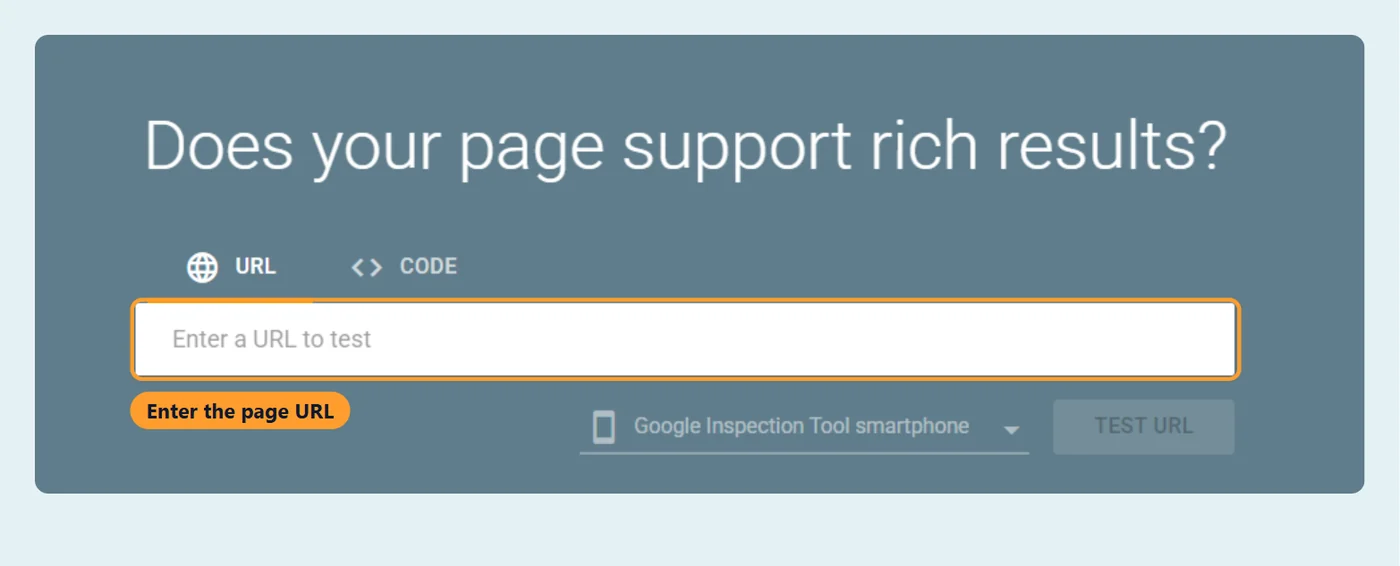
The test screen: enter a URL, or paste your markup in the Code tab.
3. Read the summary
The summary at the top tells you how many valid items Google found. Our example page had 11.
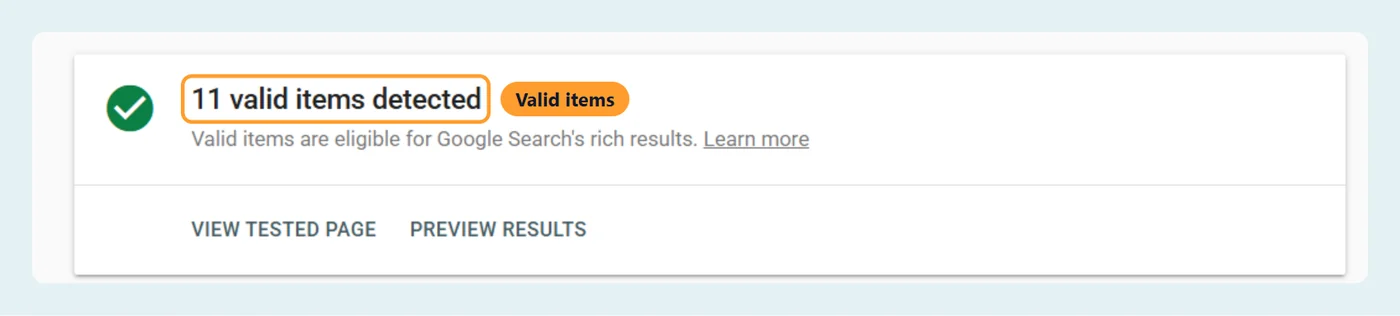
Valid items are eligible for rich results, but display is not guaranteed.
4. Open each type
The list shows which types the page qualifies for. Our example had breadcrumbs, discussion forum, recipes, review snippets and videos.
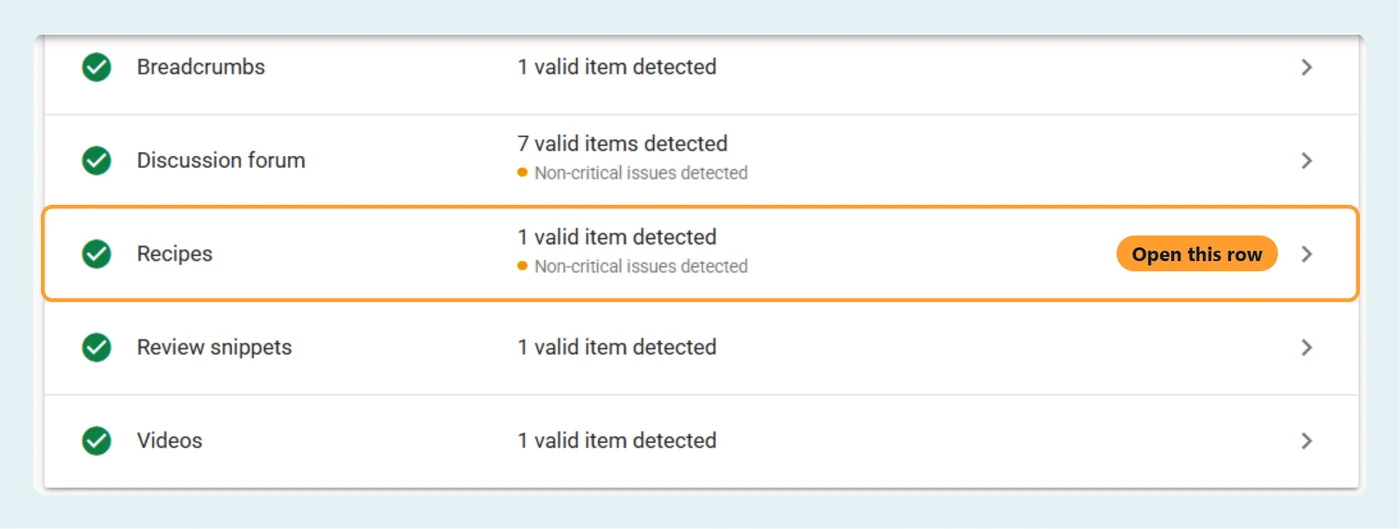
An orange note means the item is valid but could be improved.
5. Read warnings correctly
There are two levels. A critical issue removes the item from rich results, so fix it right away. A non-critical issue means an optional field is missing. Our page was only missing the optional keywords field, so it still qualified.
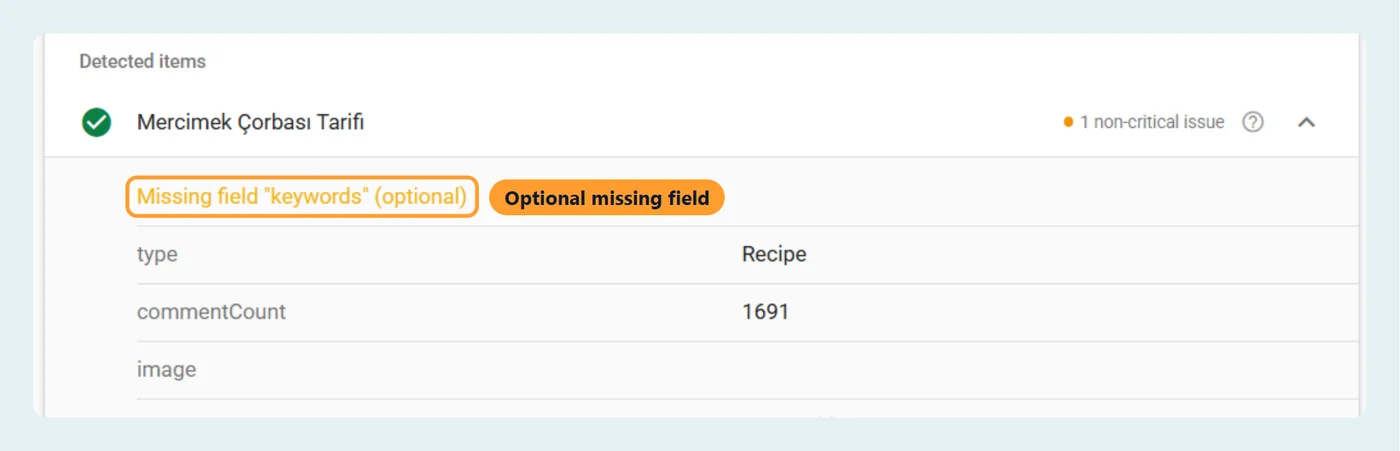
Yellow warning: the field is optional, so the recipe is still valid.
6. Fix and monitor
Run the test again after each fix. Then check the rich result reports in Search Console and the Search appearance section of the Performance report. Google may take several days or longer to pick up the change.
Required fields by type
| Type | Required fields |
|---|---|
| Recipe | name, image |
| Product | name, plus one of offers, review or aggregateRating |
| Event | name, startDate, location |
| VideoObject | name, thumbnailUrl, uploadDate |
| BreadcrumbList | itemListElement |
Common mistakes
- Marking up what is not on the page. Prices and ratings in the schema must match what visitors see.
- Adding made-up reviews. Fake ratings can lead to a manual action.
- Testing one page only. Try several pages that use the same template.
- Forgetting theme updates. Markup can vanish quietly when a plugin or theme changes.
Test your page for free
Google's tool focuses on rich results. We built our own tool so you can also see title length, canonical, hreflang and speed on one screen. The Free SEO and Rich Results Test needs no account, runs 23 checks and reviews each JSON-LD type.

Our test summary: score, issue count and eligible rich result types.
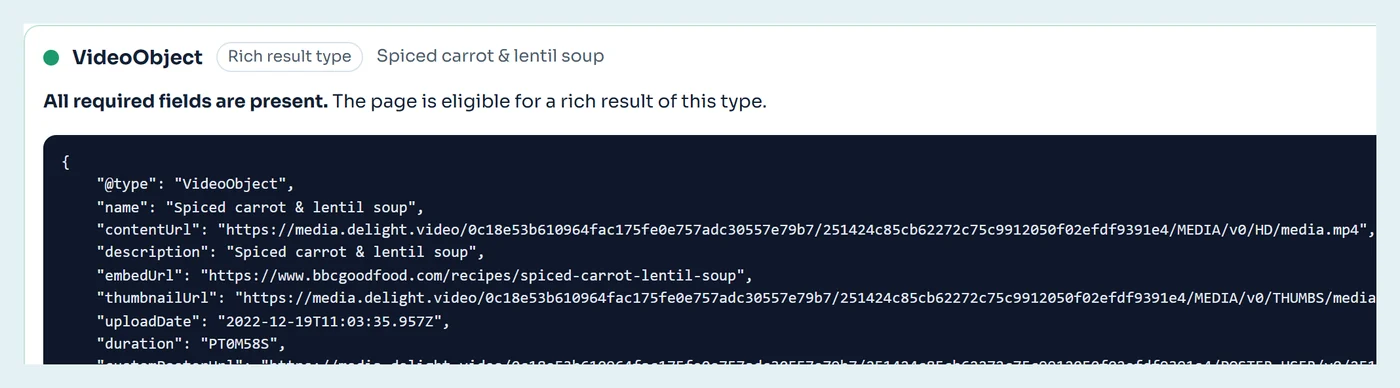
Type detail: when the required fields are complete, the tool says so clearly.
Let us handle it for you
If the test finds gaps, or you would rather not interpret the results yourself, TurkWebsite takes on the work at an affordable price with a written scope. Customers outside Turkey pay no Turkish VAT.
- Technical SEO Setup: we set up structured data, the sitemap, canonical tags and language tags.
- One-Time Technical Check: we review your site and give you a prioritised list of issues.