























What Happens If the Internet Goes Down? 1.5 Million Kilometres on the Ocean Floor
The photo you send does not go to a satellite; it goes to the ocean floor. Behind the Screen episode 2: undersea cables, the sixteen-hour message of 1858, why cables break and why your internet stays up.
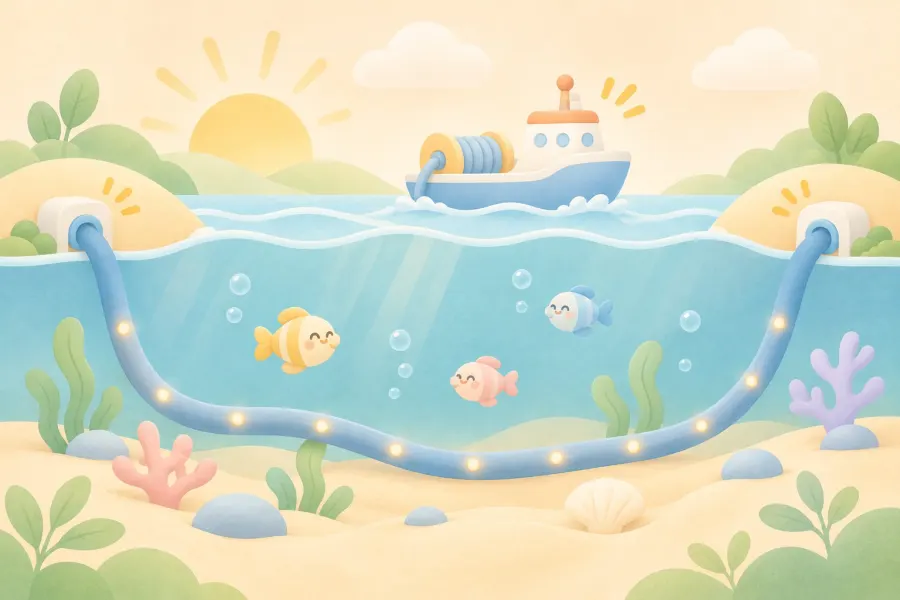
You send a photo to someone in America and it takes less than a second. Most of us picture that photo going up to a satellite and back down on the other side. In fact it never goes near a satellite; it goes down to the bottom of the ocean. In 2022 one of those cables broke and a whole country lost almost all contact with the rest of the world for thirty-eight days. So why doesn't your internet go down?
This article is the written version of the second episode of Behind the Screen (Ekranın Arkası), a series on our YouTube channel. In the first episode we looked at how Google finds an answer; this one is about how that answer reaches you. The illustrations here are the scenes from the video, which is in Turkish.
In short:
- More than 99 percent of intercontinental internet traffic travels through cables on the ocean floor, not via satellite.
- There are over 1.5 million kilometres of cable under the oceans; at the core, glass fibres as thin as a hair carry light.
- There are about 200 cable faults a year worldwide; two thirds are caused by fishing nets and ship anchors, not sharks.
- Your internet keeps working because the internet is not a single pipe but a network of routes. Turkey alone has five separate cables landing on its coast.
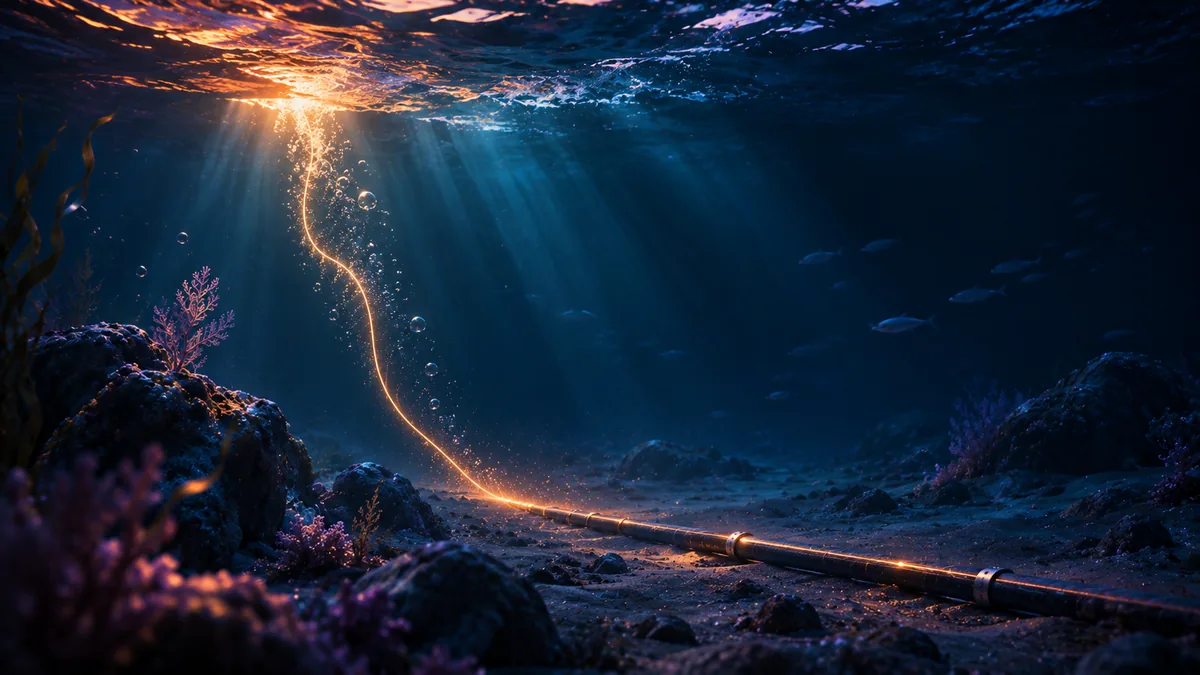
No cloud, hardly any satellites
When we talk about the internet we say "the cloud": our photos are in the cloud, our email is in the cloud. But the cloud is not in the sky. It is computers in buildings in another city, sometimes on another continent. We call these buildings data centres.
For the route between continents, most of us think of satellites too. It is the other way round. According to TeleGeography, the research firm that maps the world's cables, more than 99 percent of intercontinental data traffic travels through cables under the ocean. The satellite share is so small that, the last time it was measured, it was less than half a percent of US international communications capacity.
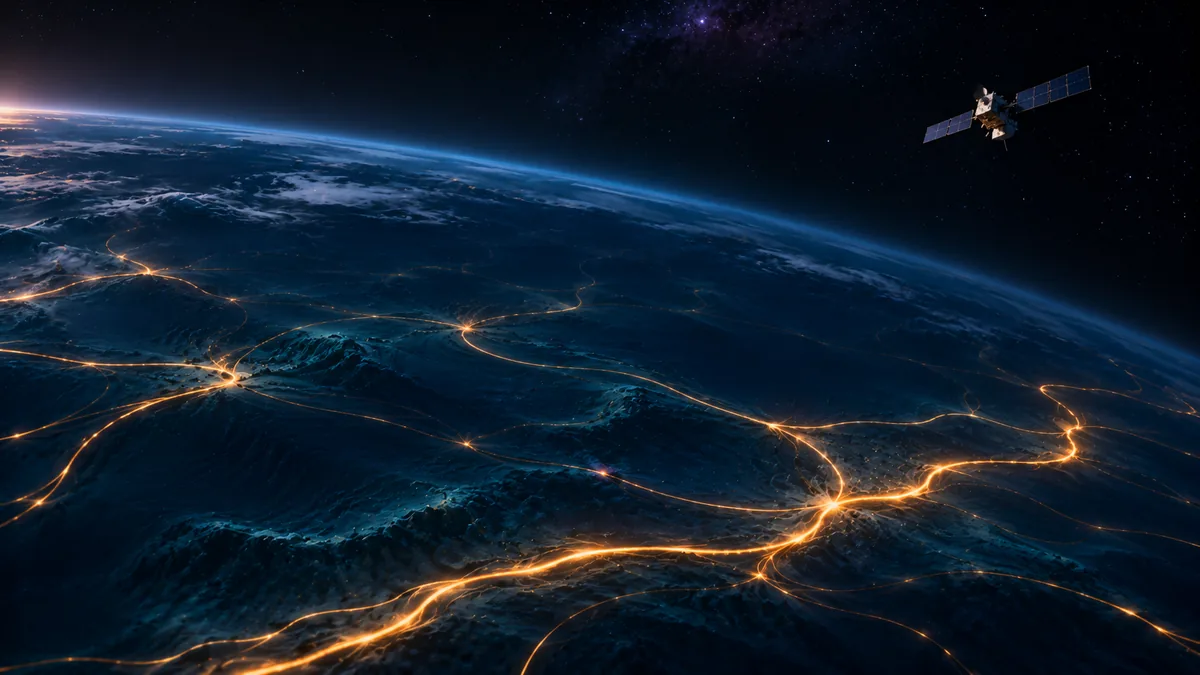
According to TeleGeography's figures for early 2026, more than 1.5 million kilometres of cable lie on the ocean floor. That is enough to wrap around the Earth 37 times. The company tracks more than 600 cable systems that are active or planned. And the story began more than 160 years ago with a single message.
1858: a sixteen-hour message
The year is 1858. Two ships meet in the middle of the Atlantic, splice together the ends of the cable they are carrying and sail off in opposite directions: one to Ireland, the other to the island of Newfoundland in eastern Canada. Behind them a telegraph cable sinks to the bottom of the ocean.
In August, Queen Victoria sends a 98-word message of congratulations to the President of the United States. Transmitting the whole message takes about sixteen hours. A journey we make in a second today took sixteen hours then. It was still a revolution: before that, the same news could only cross by ship, on a voyage lasting days.
In New York the news is greeted with jubilation and fireworks are set off in the cable's honour. But sparks land on the roof of City Hall and its cupola catches fire. The joy does not last long either: the cable works for only a few weeks before falling silent. The most commonly cited reason is that too high a voltage was applied to speed up the messages. A lasting connection was not made until 1866.



A cable as thick as a garden hose
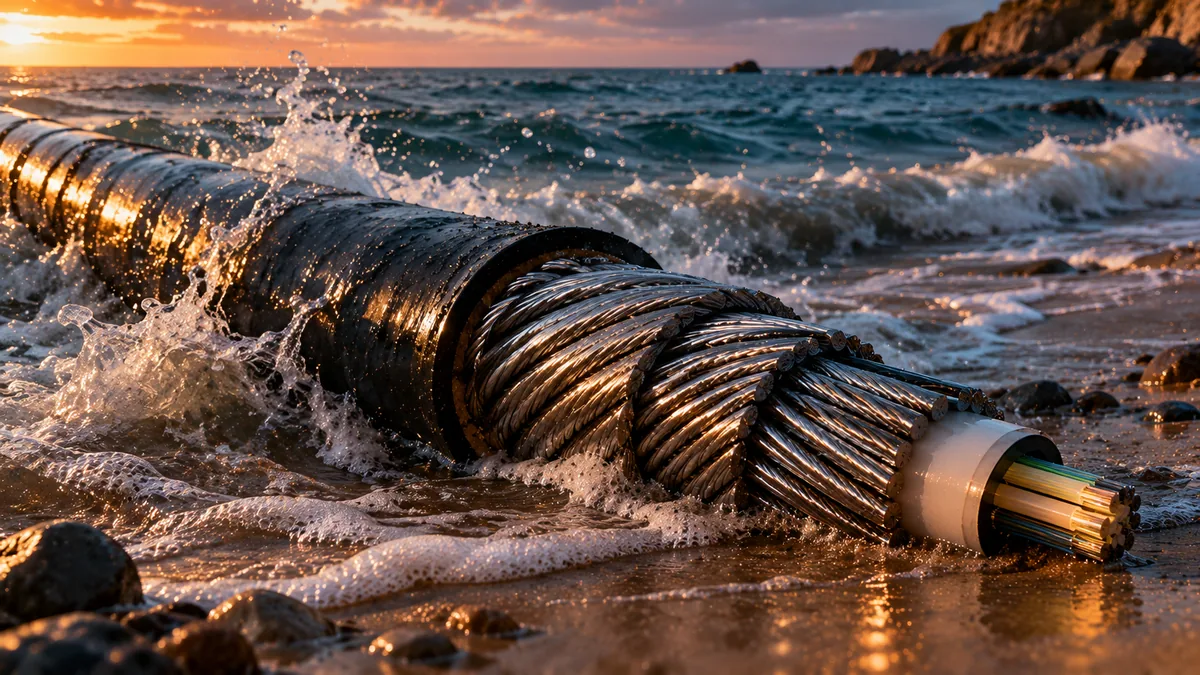
At the very centre of today's cable are glass fibres as thin as a human hair. Information travels through them not as electricity but as light. A photo, a message, a video: all of it becomes light flashing on and off very fast.
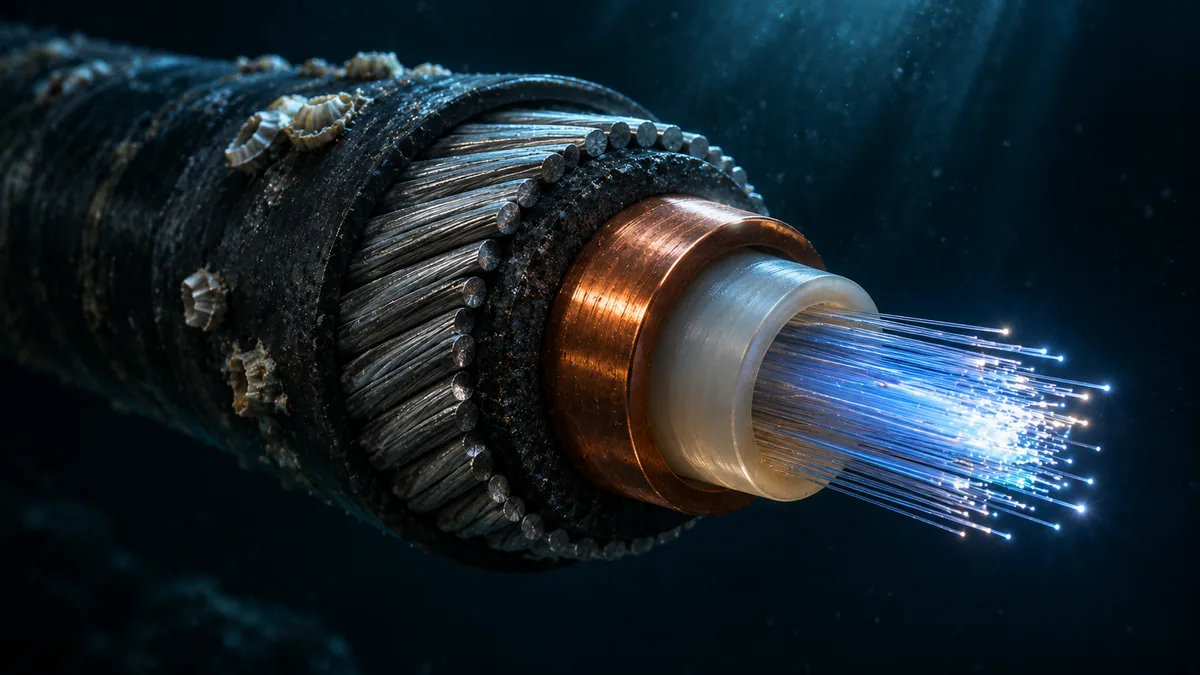
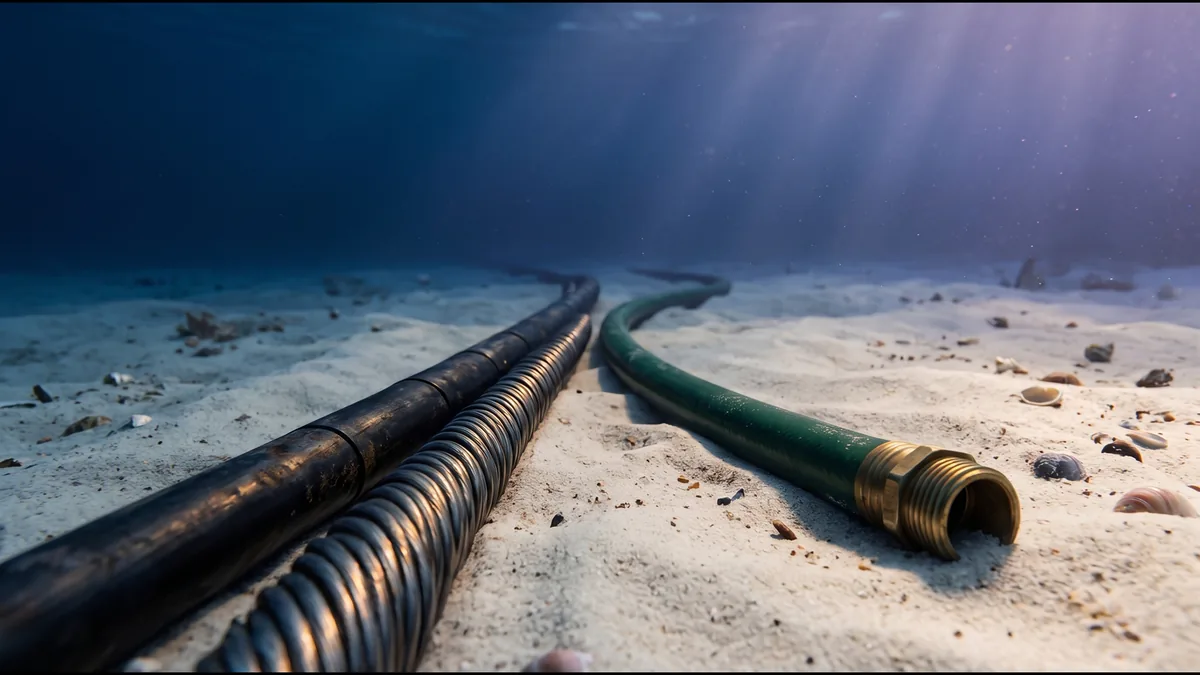
For most of its route across the ocean, the cable is about as thick as a garden hose. In the deep sea it is not buried; it is simply laid on the bottom. Closer to shore the dangers increase, so the cable is buried under the seabed and wrapped in extra steel armour.
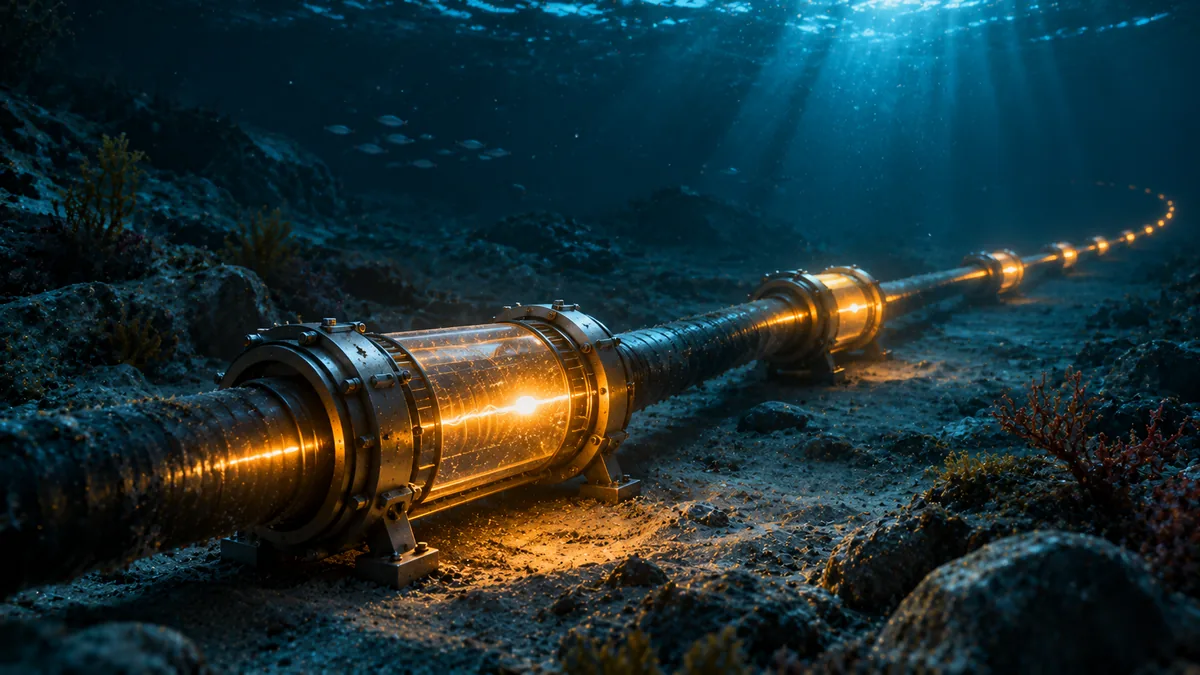
Light weakens as it travels thousands of kilometres. That is why there are devices along the cable at regular intervals that boost the light again (repeaters). Their power also comes from the shore, through the copper conductor inside the cable; landing stations feed that conductor with thousands of volts.
Who pays for these cables? It used to be almost only telephone companies. Today Google, Meta, Microsoft and Amazon are among the biggest investors in new cables. Google names its cables after people from history: its first fully private intercontinental cable is named after Marie Curie, who won two Nobel Prizes, and others include the programming pioneer Grace Hopper. These cables are designed to work for at least 25 years.
Why do cables break? Anchors, not sharks
A popular answer online is that sharks bite through cables. It sounds plausible, but TeleGeography counts it among the most common myths on the subject. According to data from the International Cable Protection Committee (ICPC), which keeps records of cable faults, fish bites, sharks included, did not cause a single cable fault between 2007 and 2014.
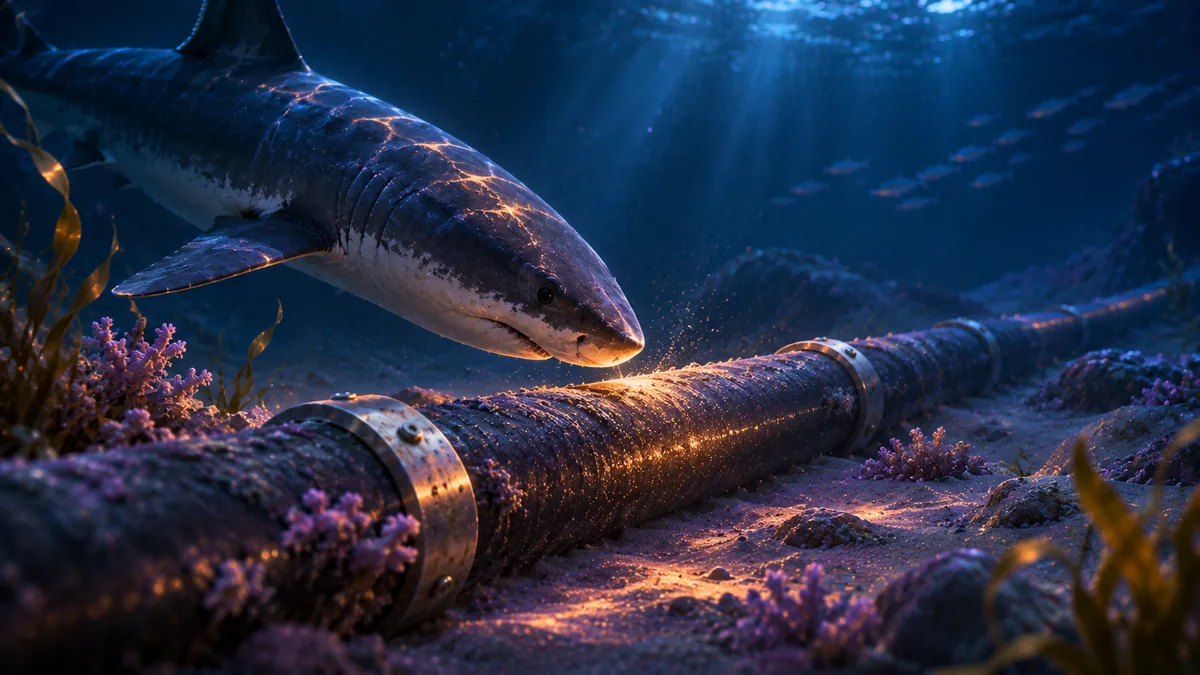
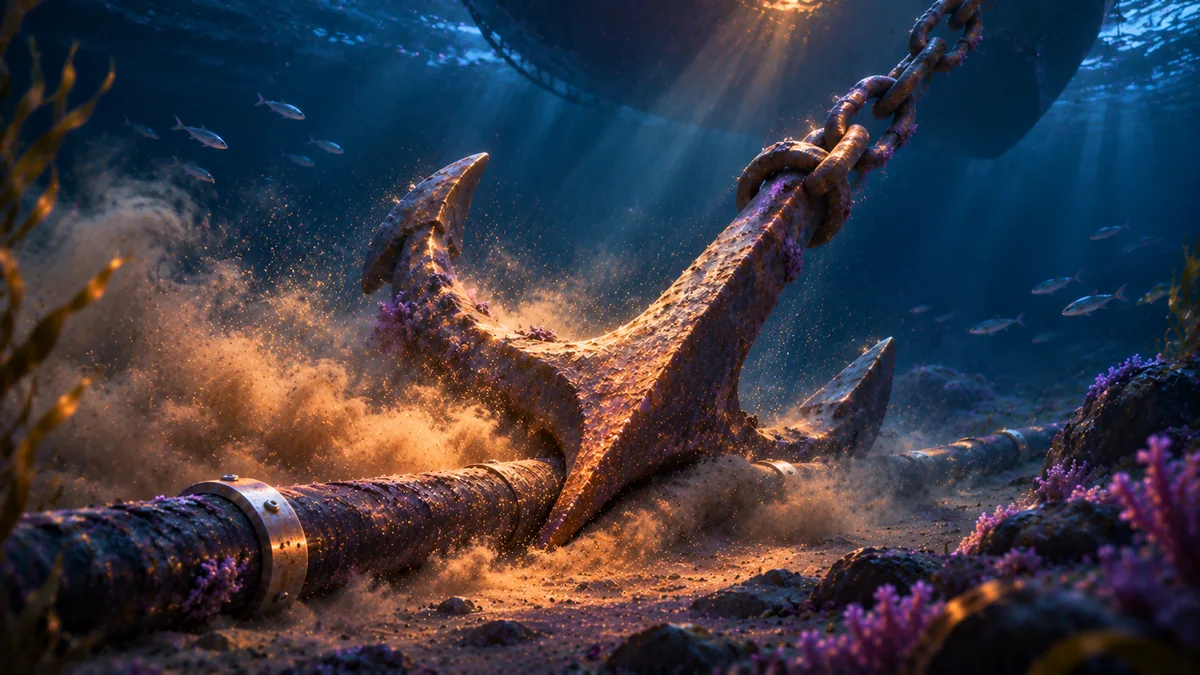
The real cause is far more ordinary. There are on average around 200 cable faults a year worldwide. Two thirds of them are accidents caused by people: fishing trawlers dragging nets along the bottom and ships dropping anchors. Some of the rest are caused by nature.
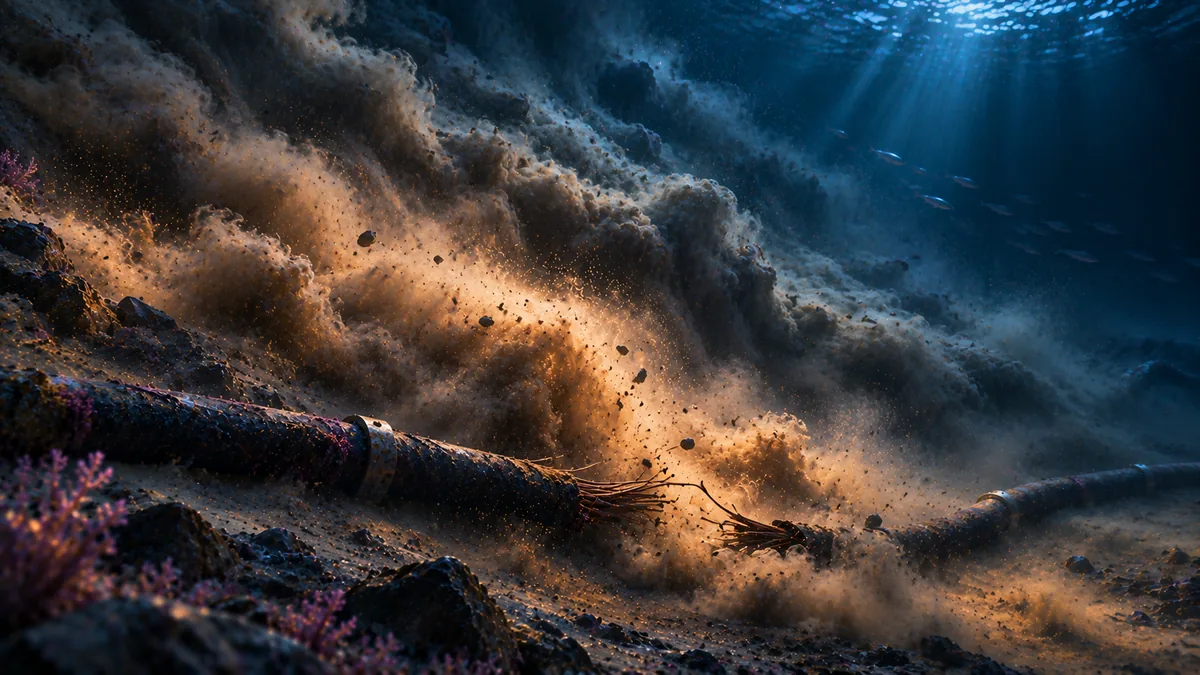
One of nature's most remarkable stories happened in 1929. In November an earthquake struck off the coast of Canada, on the edge of the shallow area known as the Grand Banks. Some of the telegraph cables on the seabed broke at once. The real puzzle came next: over the following thirteen hours the cables kept breaking one after another, each further away and deeper than the last. None of the cables in the shallows were damaged.
What had happened only became clear in 1952. Bruce Heezen and Maurice Ewing lined up the times of the breaks and found an underwater avalanche: the earthquake had shaken loose mud and sand on the seabed, and the mixture flowed down the slope. Estimates of its speed range from 60 to 100 kilometres per hour. The broken cables had become a measuring instrument for a depth no one could visit.
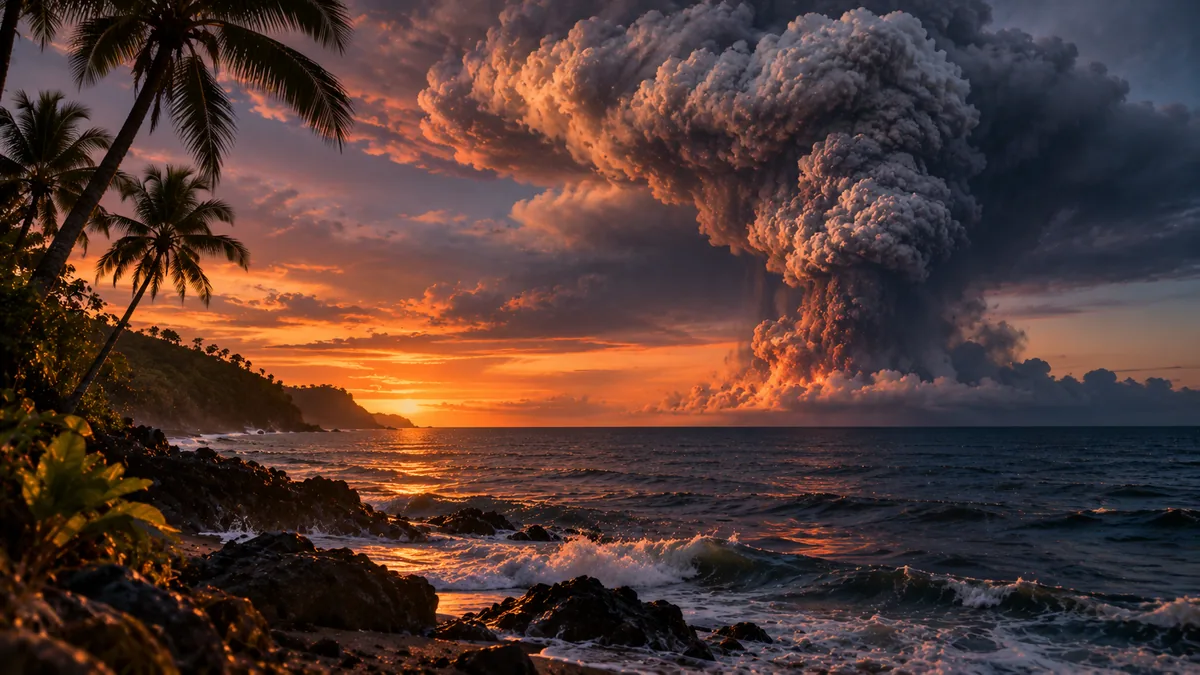
In January 2022 an undersea volcano erupted in Tonga in the Pacific, breaking the only international cable connecting the country to the world. Its main internet connection was cut for 38 days; in that time communication continued in a limited way over satellite links.
How is a broken cable repaired?
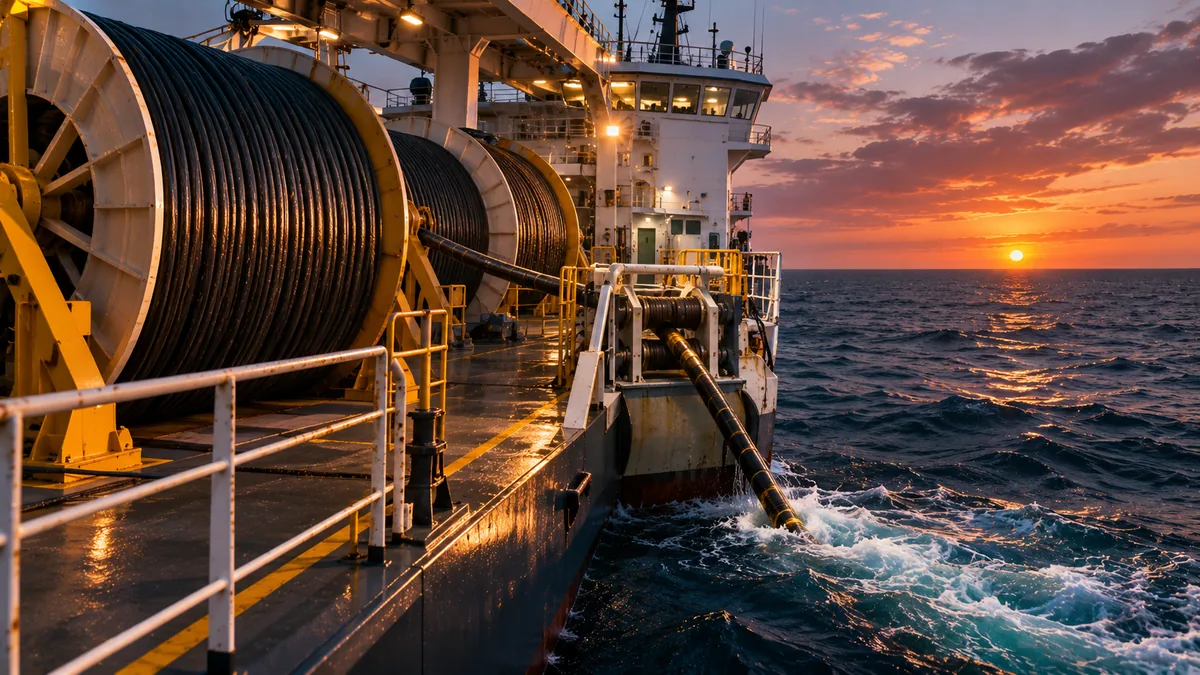
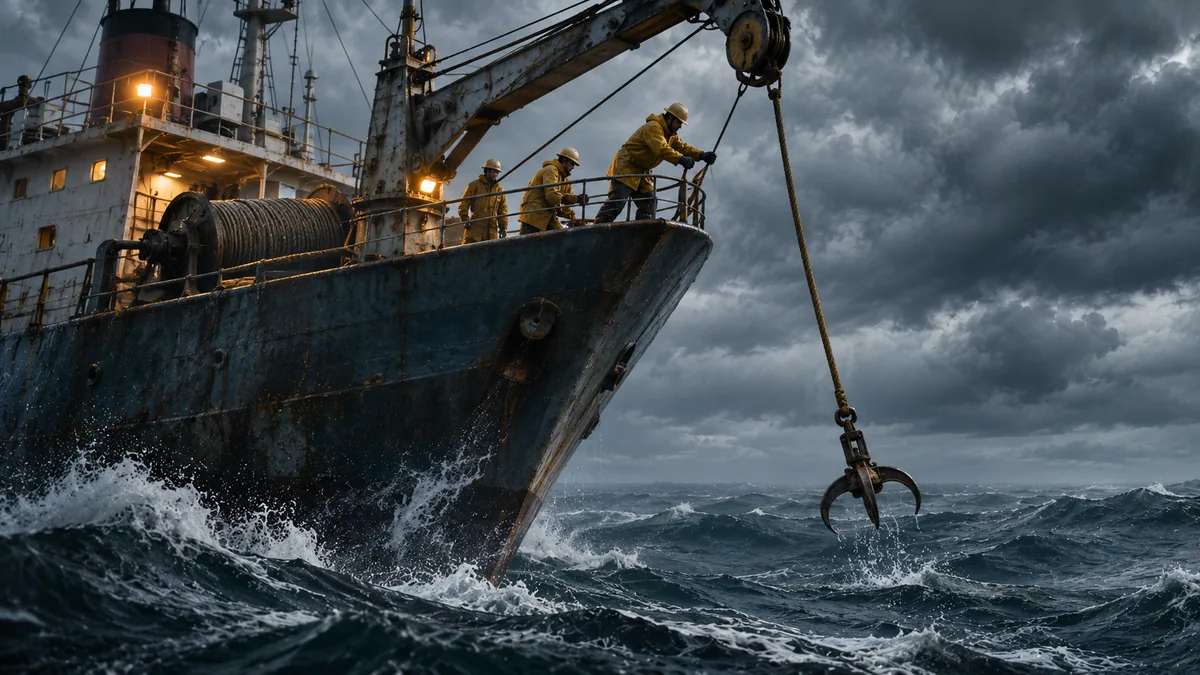
First a repair ship has to get there, which can sometimes take days. Near the break, the ship lowers a hook on a long line to the seabed and drags it along the bottom until it catches the cable. One end of the cable is hauled up on deck, then the other. In Tonga the ship had to replace about 90 kilometres of cable.
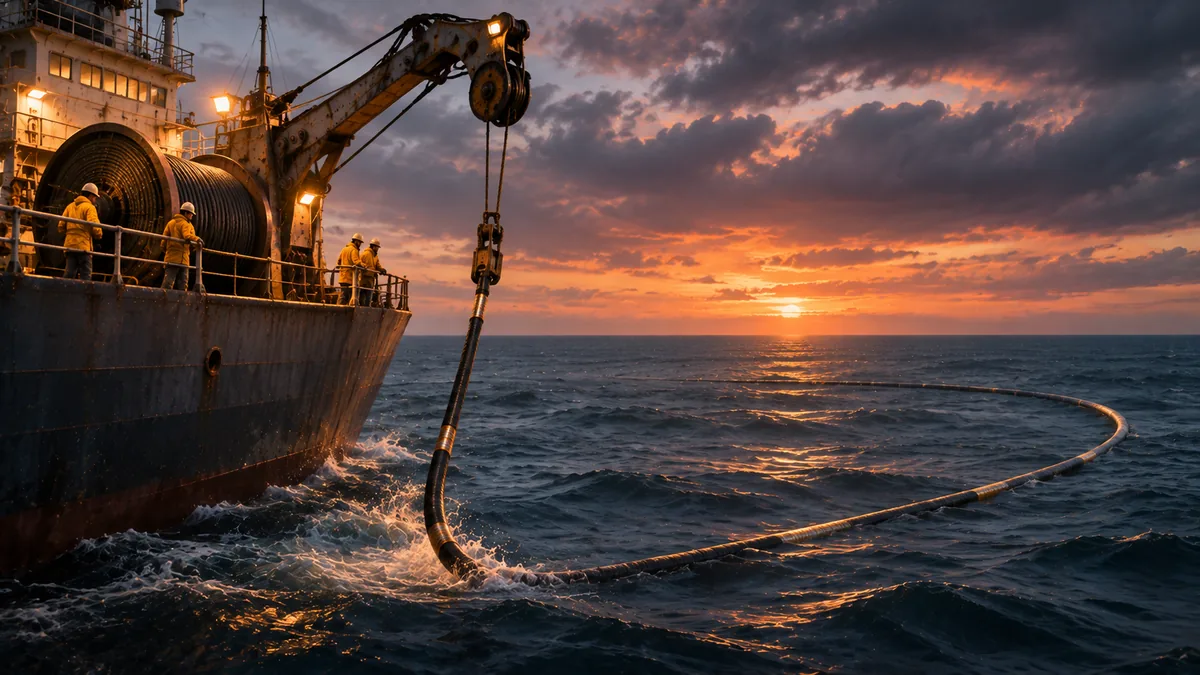
Then those hair-thin glass fibres are spliced back together on the deck of a rolling ship. The cable is tested and laid back on the seabed in a wide loop.

Why doesn't your internet go down?
If there are around two hundred faults a year, why does your internet keep working? Part of the answer is on the map. Take Turkey as an example: according to the Submarine Cable Map, five separate cables land on Turkey's coast today:
- KAFOS: across the Black Sea to Bulgaria and Romania.
- MedNautilus: from Istanbul to Greece and Italy.
- SeaMeWe-5: lands at Marmaris and links 16 countries from France to Singapore.
- Turcyos-1 and Turcyos-2: from Bozyazı and Samandağ to Northern Cyprus.
Another cable across the Black Sea is planned for 2027. Land connections to neighbouring countries are not included in this count.
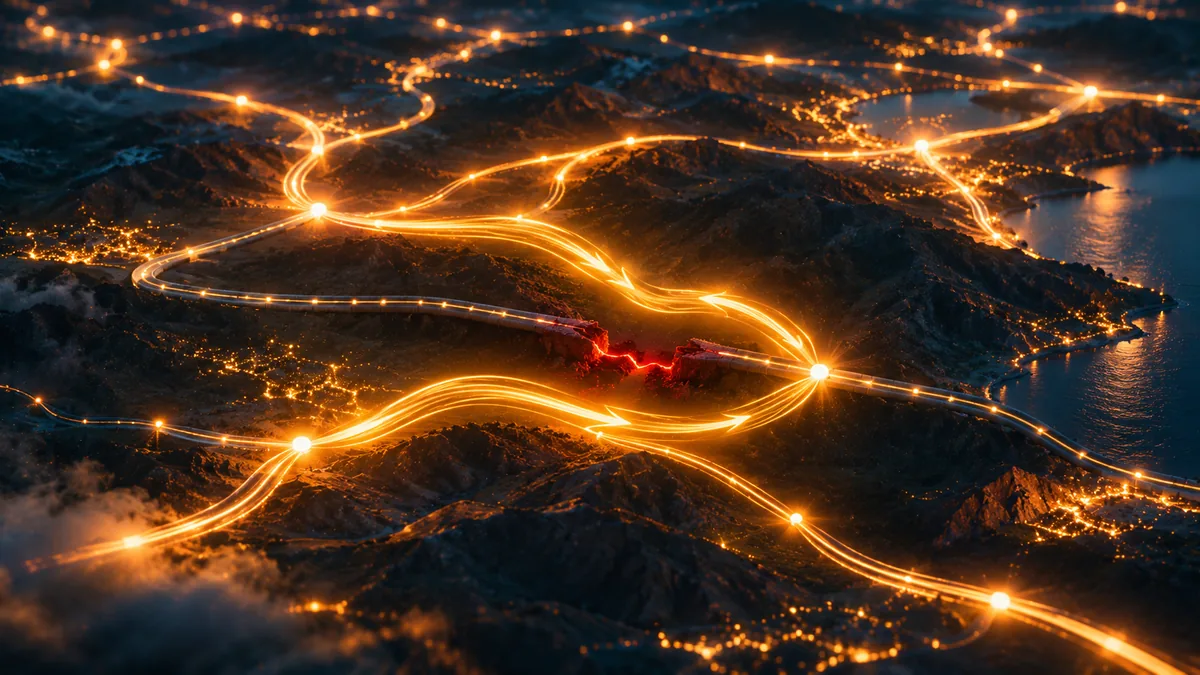
The internet is not a single pipe but a network of routes. When one cable breaks, traffic is redirected to the others; it may slow down a little, but it does not stop. That was Tonga's misfortune: it had only one cable to the outside world.
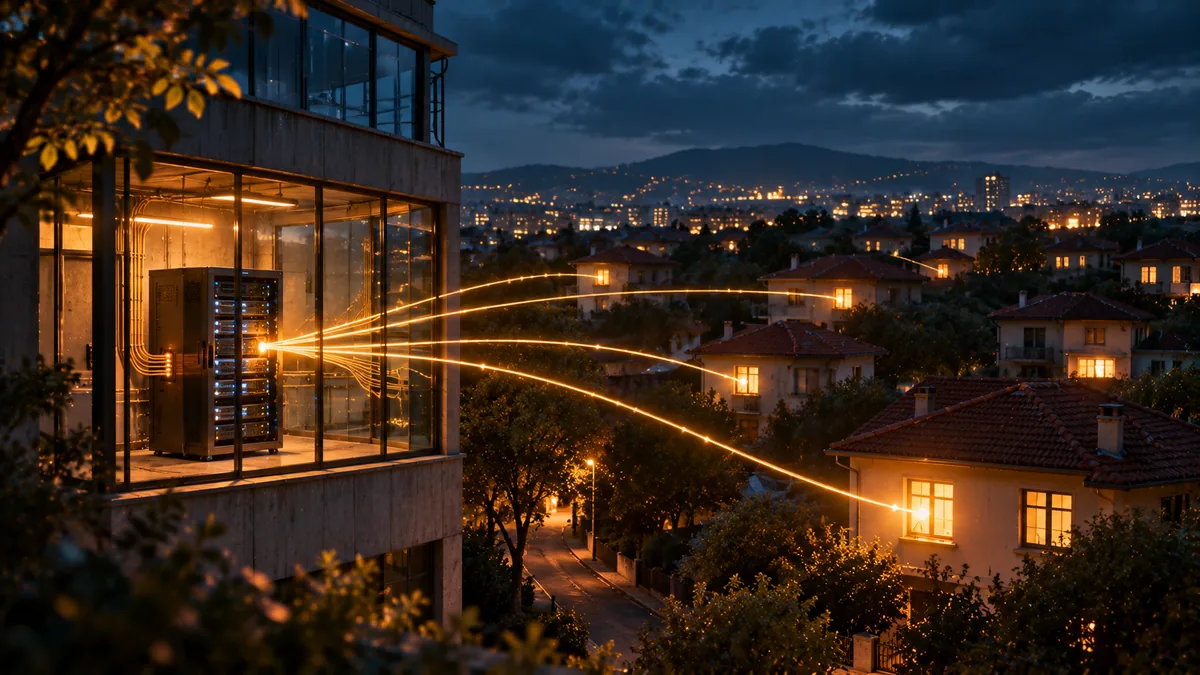
There is also a shortcut most of us never think about. Instead of fetching popular videos from across the ocean every time, Google places its own servers inside internet service providers' buildings and copies popular content there (Google Global Cache). When you press play, the video often comes from somewhere close to you; it crosses the ocean not every time it is watched, but often only once.
Where is your website's server?
The same rule applies to your website. When a visitor opens your site, the request travels to the server where your site lives and back. If the server is in America and your customers are in Europe or Turkey, every page load crosses the ocean twice. Light travels at about 200,000 kilometres per second inside glass fibre; that is very fast, but the longer the route, the more milliseconds each load gains, and loading a page often involves several of these round trips.
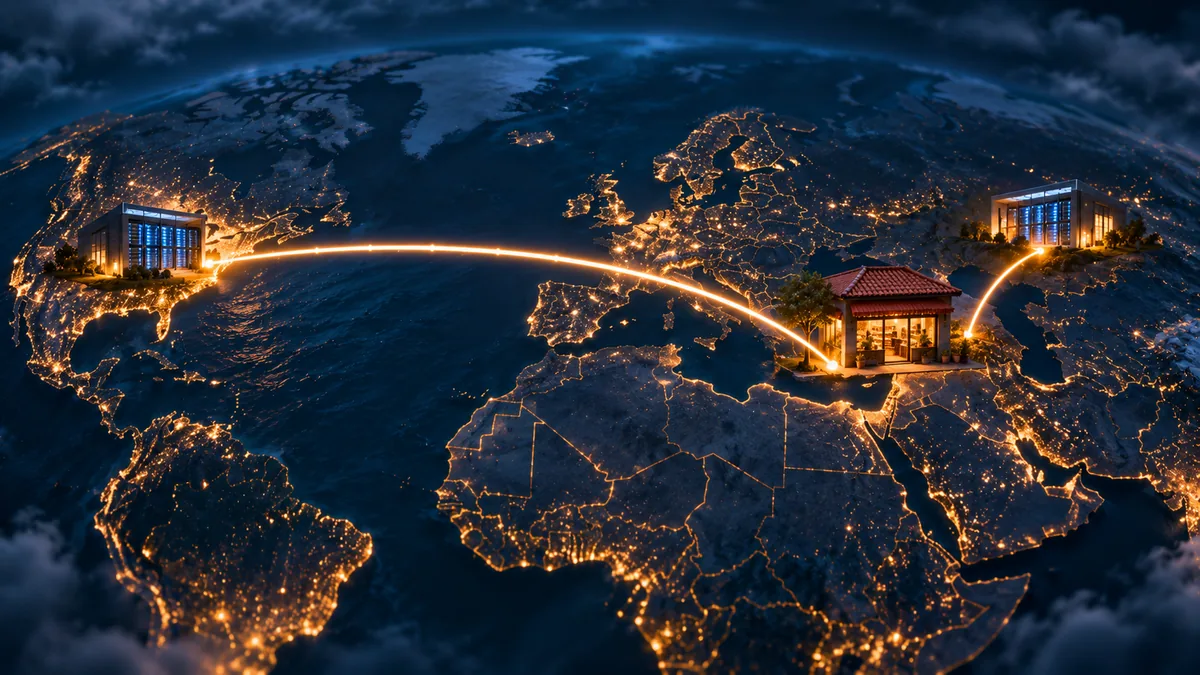
That is why it is worth knowing which country your site's server is in; you can ask your hosting company. If your visitors are mostly in one region, a server close to that region usually means a shorter route.
Measure it yourself: our free SEO check tool also shows how quickly your server sends its first response (TTFB). Under half a second is considered good. No sign-up needed.
Next episode: how fast can your password be cracked?
Today we followed a photo on its journey: no cloud, hardly any satellites; cables as thick as a garden hose on the ocean floor, and when one breaks, a ship sets sail. But what stands at the end of that route, at the door to your accounts? The password you type every day. In the next episode of Behind the Screen we look at how many seconds it takes to crack a password.
Read episode 3: How Long Does It Take to Crack Your Password? Behind the Screen of a Strong Password
Sources and related pages
- TeleGeography: Submarine cable FAQs (1.5 million km, faults, cable structure, lifespan)
- TeleGeography: checking the 99 percent claim
- Submarine Cable Map: Turkey
- National MagLab: the 1858 transatlantic telegraph cable
- Earth Magazine: 1929 Grand Banks and turbidity currents
- NPR: Tonga's internet restored after 5 weeks
- TeleGeography: What happens when submarine cables break?
- Google: Global Cache
- Behind the Screen episode 1: How does Google Search work?
- TurkWebSite on YouTube: the Behind the Screen videos (in Turkish).
How fast does your site load?
Enter your page address and see server response time, title, description and mobile friendliness on one screen. If your site is slow, we can speed it up together.